
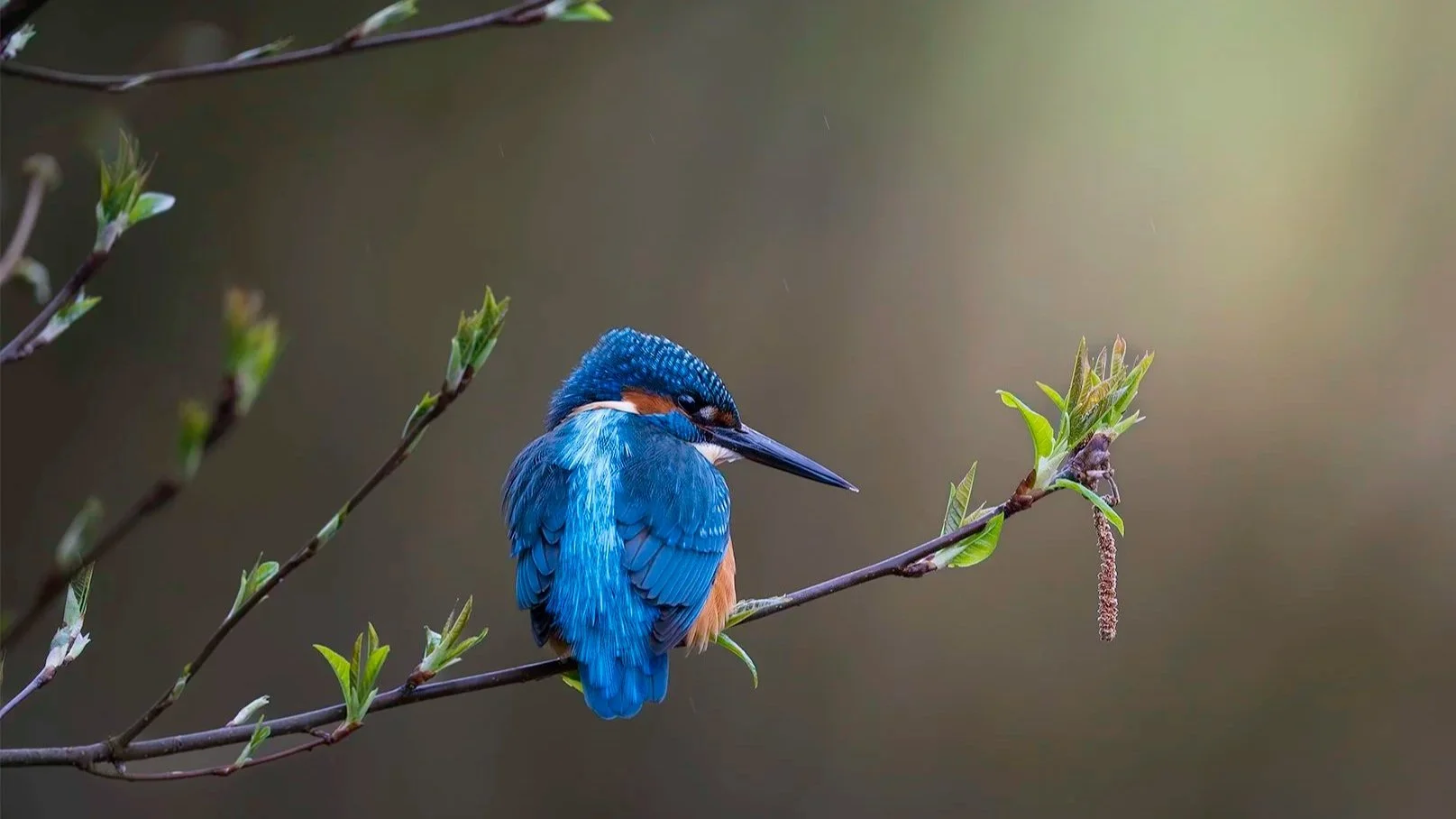
Kingfisher Photography in Scotland:
Field Notes from the Riverbank
Photographing Kingfishers in Scotland – Behaviour, Fishing and the Reality Behind the Shot
“Observations from the riverbank – wildlife photography in Scotland.”
Field Notes: Kingfishers
(or… the tiny blue bird that makes photographers question their life choices)
There are few birds in Britain that inspire quite the same reaction as a kingfisher.
The first time you see one, it’s usually not a sighting at all — it’s a flash. A streak of electric blue that shoots low over the river like someone fired a jewel from a slingshot.
You look up.
You look down.
You look at the water.
And then you say the immortal wildlife photographer phrase:
“Did you see that?”
Because once you’ve seen a kingfisher, you want to see it again.
And once you’ve tried to photograph one… well, that’s when the real fun begins.
Lesson 1: Kingfishers Have Favourite Perches
And they know it.
A kingfisher will sit quietly on a branch above the water watching for fish before plunging vertically to catch one.
Photographers call this “the perch.”
The kingfisher calls it “my office.”
You might sit for an hour waiting.
Eventually the bird arrives.
Not on the beautiful mossy perch you placed lovingly at sunrise.
No.
It lands on the ugliest stick in the river.
Lesson 2: They Are Faster Than Your Camera
Kingfishers hunt by diving straight into the water after spotting fish from a perch, grabbing them with their bill before returning to the branch.
The dive itself lasts roughly the same amount of time as it takes your brain to say:
“… a kingf—”
Splash.
Gone.
You check the back of the camera.
You have a photograph of:
a branch
some water
and absolutely no kingfisher.
Lesson 3: The Flash of Blue Is Real
When a kingfisher flies away it often appears as a sudden streak of bright blue over the water.
That’s not poetic exaggeration.
That’s exactly what it looks like.
A blue comet.
A turquoise blur.
A bird that seems to have been designed purely to test the limits of autofocus.
Lesson 4: The Fishing Is Relentless
During the breeding season kingfishers become incredibly busy hunters.
A pair may catch dozens — sometimes close to a hundred small fish a day to feed their chicks.
Which explains two things:
Why they keep returning to the same perch
Why photographers eventually figure out where that perch is
And when you do… the magic starts.
Lesson 5: The Moment
After the dive the kingfisher returns to the perch with the fish clamped sideways in its bill.
The fish is then bashed against the branch to kill or soften it before being turned head-first and swallowed.
For the photographer this is the moment.
Wings settling.
Water droplets falling.
A silver fish glinting in the bill.
It lasts perhaps half a second.
But if you catch it…
you have a photograph that tells a story.
The Real Secret
Kingfishers are not actually rare.
They’re just very good at being brief.
You might sit beside a river for hours and see nothing.
Then suddenly:
Blue flash.
A dive.
A splash.
A fish.
And just as quickly… You might get lucky and this happens - Regurgitating a Fish pellet, right in front of me!
And then… silence again.
Explore More Wildlife Field Notes
If you enjoyed this glimpse into the world of kingfishers, you’ll find many more stories from Scotland’s wild places throughout the site.
From Atlantic rainforest landscapes to seasonal wildlife encounters, the Wildlife Field Notes section shares observations, photographs and moments from the forests, rivers and hills of Scotland.