
The Return of the Osprey
A Fisher of the Highland Lochs
A Fisher of the Highland Lochs
There is often a moment of stillness before an osprey dives.
High above a Highland loch the bird hangs briefly in the air, wings beating slowly as it fixes its gaze on the water below. From the shoreline it appears almost suspended — watching, calculating, waiting.
Then suddenly the calm breaks.
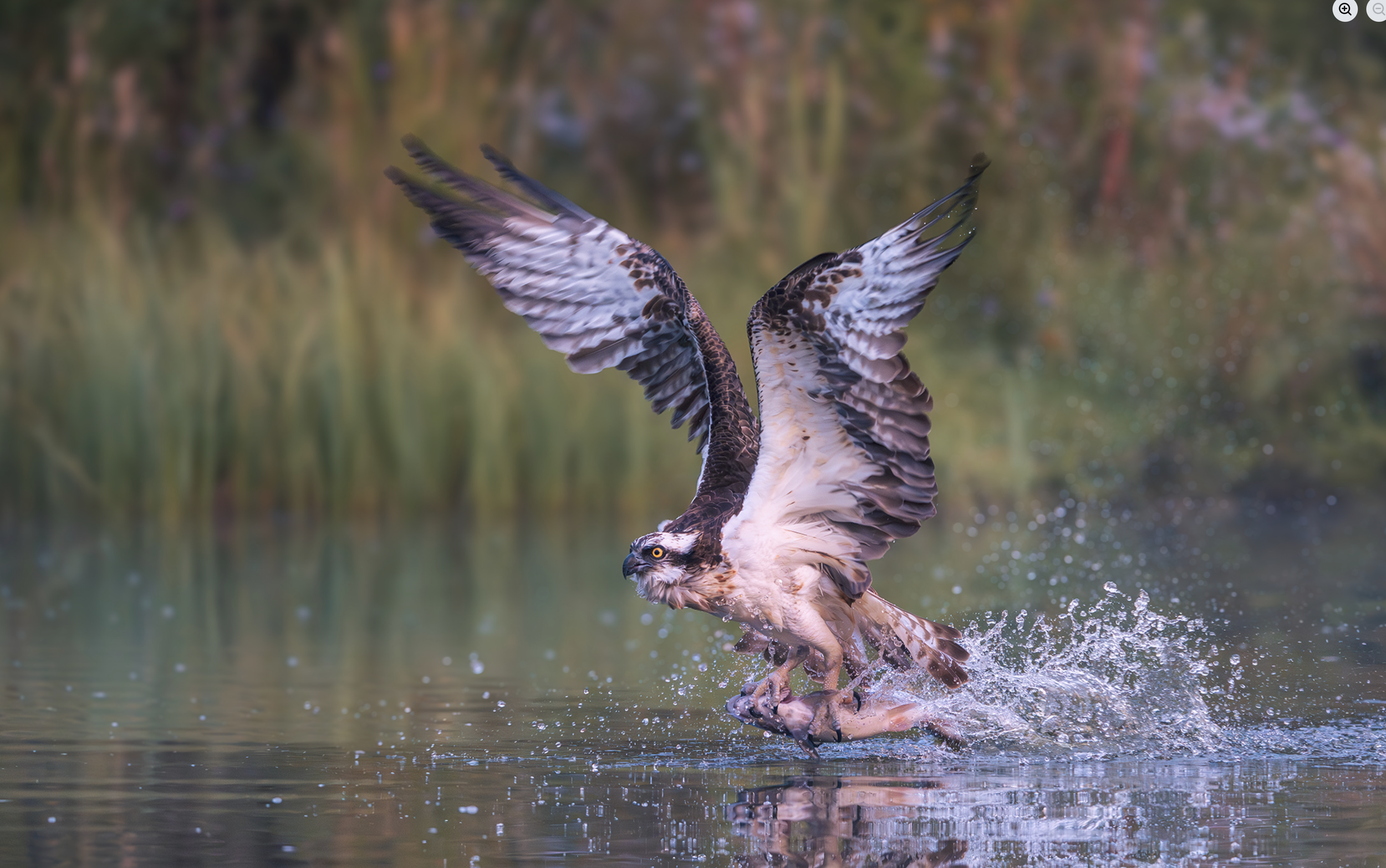
The osprey folds its wings and plunges feet-first into the loch, disappearing in a burst of spray. A second later it rises again, wings labouring against the weight of water and prey, a silver fish locked firmly in its talons.
It is one of Scotland’s most dramatic wildlife moments — and one that was almost lost.
Scotland’s Lost and Found Bird
The Osprey was once a familiar sight over Scottish lochs and rivers. But relentless persecution through the 18th and 19th centuries drove the species to extinction as a breeding bird in Britain.
By the early 1900s the osprey had vanished.
Then in 1954 something remarkable happened.
A pair of birds returned to nest at Loch Garten in the Cairngorms. Their arrival marked the beginning of one of Britain’s most celebrated wildlife recoveries.
Careful protection allowed the birds to succeed, and over the decades the population slowly spread again across Scotland’s lochs and forests.
Today ospreys once again patrol waters from the Highlands to The Trossachs, Argyll and beyond.
Built for Fishing
Few birds are so perfectly designed for hunting fish.
An osprey’s feet are equipped with curved talons and rough pads that grip slippery prey with remarkable efficiency. Even more unusual, the outer toe can rotate backwards, allowing the bird to hold fish with two toes forward and two back — a powerful natural clamp.
Word of the Week: The Zygodactyl Feet of Birds
Once airborne the osprey performs another clever trick.
The fish is rotated so it faces head-first into the wind, reducing drag as the bird carries its catch across the loch or back towards the nest.
These adaptations make the osprey one of the most specialised fish hunters in the bird world.
A Seasonal Visitor
Despite their strong presence in Scotland, ospreys are not here all year.
Each spring they return from long migrations from West Africa, often travelling thousands of miles to reach the same nesting territories.
By late March or early April, the first birds begin appearing over Scottish lochs again.
Throughout summer they hunt tirelessly, raising chicks that will make their own remarkable journey south by late summer.
Then by September, most have gone — leaving the lochs quiet again until the following spring.
Watching the Loch
For photographers and wildlife watchers alike, osprey encounters often begin with patience.
A bird may circle high above the water before hovering briefly to judge the depth of fish below. When the dive comes it is sudden and explosive — a moment of action that lasts only seconds.
But when it succeeds, the reward is unforgettable: an osprey climbing from the water, silver prey flashing in the sunlight, droplets falling back to the loch below.
It is a reminder that Scotland’s wild landscapes still hold stories of loss, return and resilience.
And sometimes all you need to do is sit quietly beside the water and wait for the sky to break.
Explore More Wildlife Field Notes
If you enjoyed this glimpse into the world of Ospreys, you’ll find many more stories from Scotland’s wild places throughout the site.
From Atlantic rainforest landscapes to seasonal wildlife encounters, the Wildlife Field Notes section shares observations, photographs and moments from the forests, rivers and hills of Scotland.