
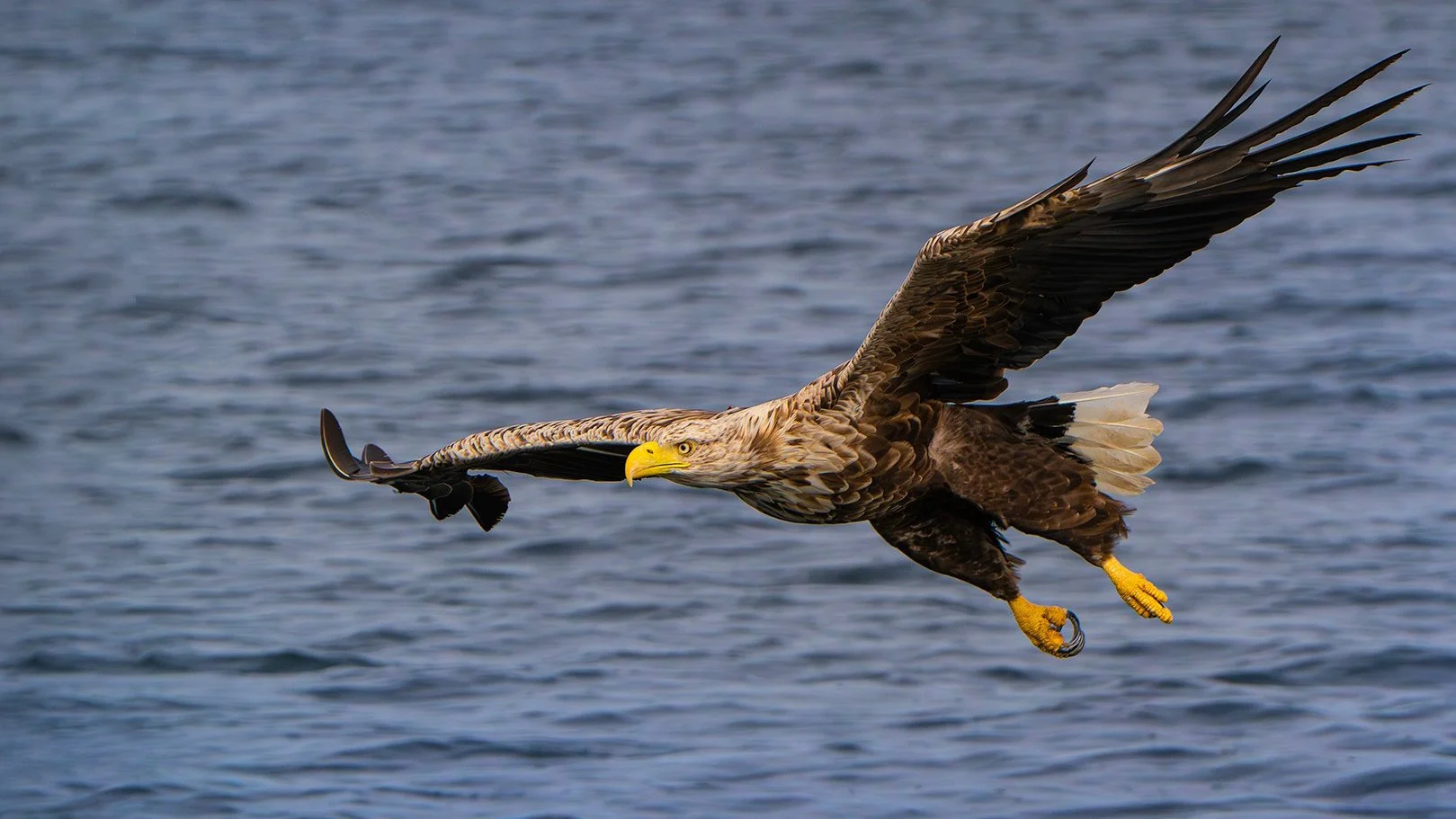
Sea Eagle Photography in Scotland:
Field Notes from the Lady Jane
“Observations from on the boat – wildlife photography in Scotland.”
Sea Eagles on Mull are among the most reliable and powerful wildlife encounters in the UK.
The White-Tailed Sea Eagle (Haliaeetus albicilla), once extinct in Britain, now thrives along Scotland’s west coast.
Around the Isle of Mull, these birds can be seen in close proximity, particularly on guided trips such as Lady Jane Boat Trips, offering a rare chance to observe their scale, behaviour, and effortless flight.
Drama vs Depth
White-tailed Sea Eagles carry a certain weight before you even see them.
Wingspan. Power. Presence.
There’s an expectation of drama — of speed, impact, something cinematic.
But spend time with them, and what stands out isn’t force… it’s control.
They don’t rush.
They don’t waste energy.
They move through the air with a kind of quiet authority — slow, deliberate, almost effortless.
What looks dramatic from a distance becomes something more measured up close.
Less spectacle.
More presence.
Story beneath the sky
Out on the water around Isle of Mull, the scale of things shifts.
Sea, cliffs, open sky — and somewhere within it, a bird that seems to belong to all three.
You scan the ridgelines first. Then the edges of the shore.
And then, suddenly, there it is.
Not appearing — just entering your awareness.
Broad wings held steady.
Minimal movement.
Every adjustment precise.
From the deck of Lady Jane Boat Trips, you’re close enough to feel the weight of it — but still very much a guest in its space.
The bird isn’t performing.
It’s simply moving through a landscape it has always known.
Salt air. Open water. Wind that never quite settles.
Light shifts constantly — breaking through cloud, sliding across the surface, catching the edges of wings.
There’s a sense of waiting, but not tension.
More a quiet anticipation.
You find yourself scanning without thinking.
Watching the horizon.
Following movement that may or may not become something.
And when it does — everything sharpens.
Feel of the day
The Experience
Seeing a white-tailed eagle well isn’t just about proximity.
It’s about scale.
Even close, they don’t feel contained.
They carry space with them.
The first pass is often the one that stays with you — not because it’s perfect, but because it recalibrates your sense of size, distance, presence.
After that, you start to notice more:
How little they flap
How they use the wind
How they hold position with minimal effort
It’s less about a single moment…
and more about understanding how they exist within it.
Optional Elements
One of the UK’s largest birds of prey
Wingspan up to 2.4 metres
Often seen along coastal cliffs and sea lochs
Feeds primarily on fish and seabirds
Frequently observed from boats around Mull
Stronghold population on the west coast of Scotland
Seasonality
White-tailed eagles can be seen year-round on Mull, but conditions shape the experience.
Spring–early summer: Increased activity, longer light, territorial behaviour
Summer: Reliable sightings, softer conditions
Autumn: Changing light, fewer visitors, strong atmosphere
Winter: Harsher conditions, but dramatic light and quieter waters
Boat-based encounters offer the most consistent opportunities across all seasons.
Conservation
Once extinct in the UK, the white-tailed eagle (Haliaeetus albicilla) is one of conservation’s quiet successes.
Reintroduced to Scotland in the late 20th century, populations have steadily recovered — particularly along the west coast.
However, challenges remain:
Habitat pressure
Human disturbance
Illegal persecution in some areas
Their presence today is not accidental.
It’s the result of long-term commitment, protection, and a landscape still capable of supporting something this large.
To see one well — especially in a place like Mull — is to witness that recovery in motion.
Explore More Wildlife Field Notes
If you enjoyed this glimpse into the world of White Tailed Sea Eagles, you’ll find many more stories from Scotland’s wild places throughout the site.
From Atlantic rainforest landscapes to seasonal wildlife encounters, the Wildlife Field Notes section shares observations, photographs and moments from the forests, rivers and hills of Scotland.