
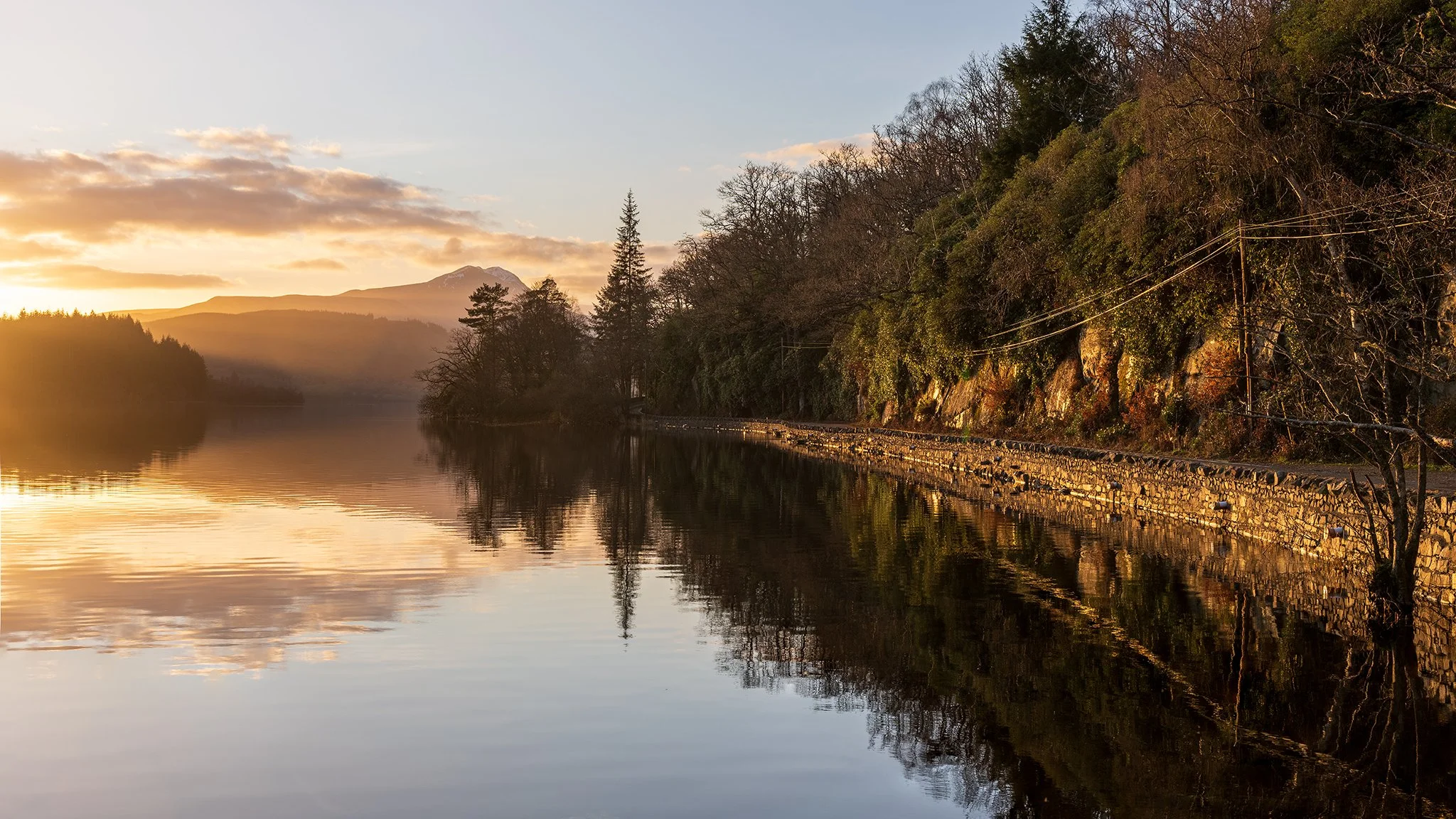
A Different Kind of Wild
Scotlands Atlantic Rainforest - The Trossachs
A private, slow journey into Scotland’s Atlantic Rainforest — ancient oak woodland, rare lichens, and the remarkable landscapes of The Trossachs.
REFRAMING THE NORTH
Just over an hour from Glasgow and Edinburgh lies one of Europe’s rarest ecosystems.
Many travellers journey north in search of Scotland’s dramatic landscapes. And rightly so.
But wildness is not always measured in height.
Here in The Trossachs, part of Scotland’s Atlantic Rainforest - sometimes called temperate rainforest or Celtic rainforest -
survives quietly — ancient oak woodland shaped by Ice Age glaciers, Atlantic moisture, and thousands of years of ecological succession.
It is globally rare.
And often overlooked.
WHAT IS SCOTLAND’S ATLANTIC RAINFOREST?
A Temperate Rainforest in Scotland
Scotland’s Atlantic Rainforest — sometimes called Temperate rainforest or Celtic rainforest — exists only along parts of the western seaboard.
Its defining characteristics include:
Ancient Atlantic oak woodland
Moss-rich understory
Rare lichen communities
High rainfall and mild maritime climate
Deep post-glacial soils
In The Trossachs, this habitat remains woven between lochs, ridges and glacial valleys.
Few visitors realise they are standing within one of Europe’s most fragile ecosystems.
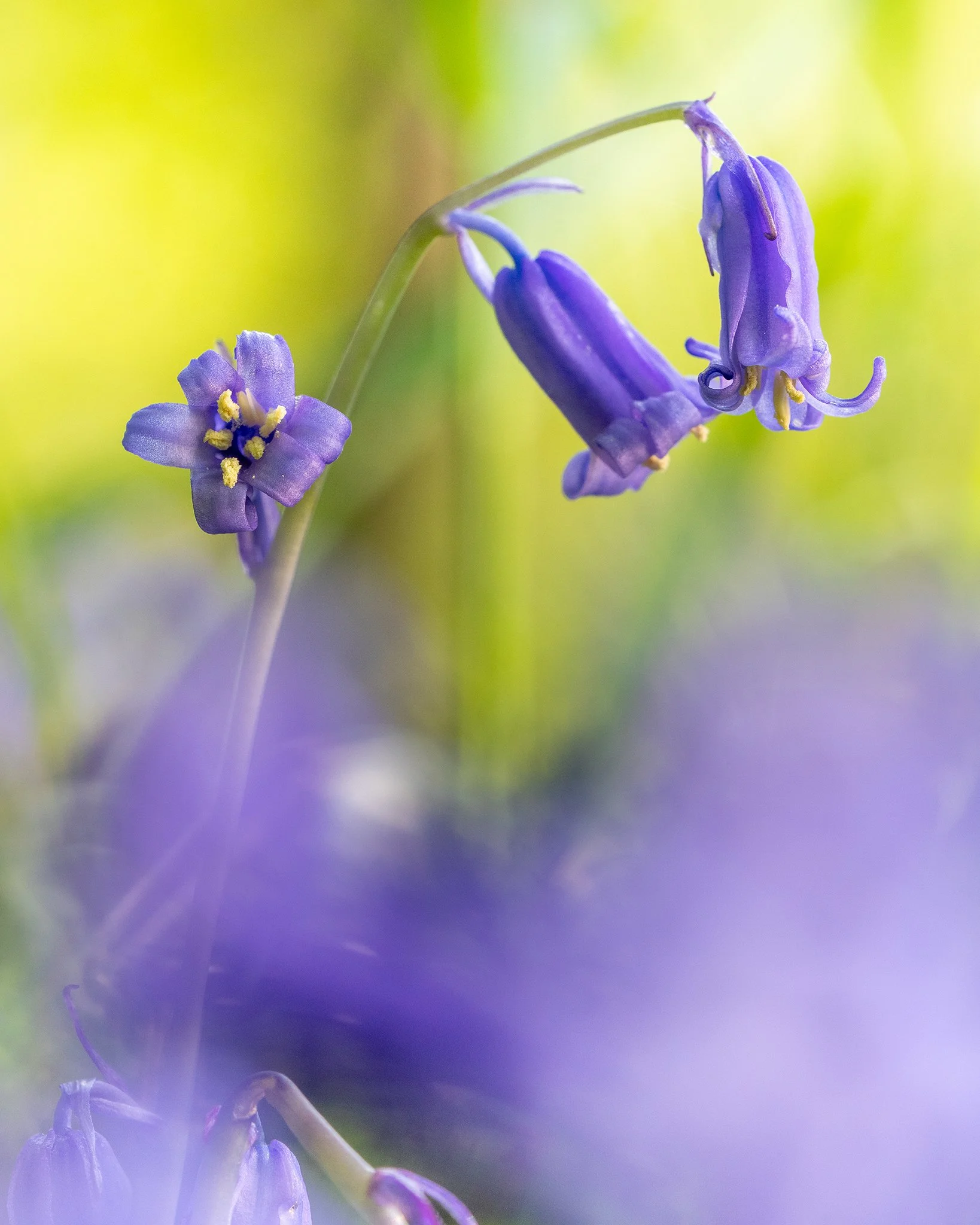
One of the World’s Rare Temperate Rainforests
Scotland’s Atlantic Rainforest is part of a rare global ecosystem known as Temperate rainforest, found only in a handful of coastal regions including the Pacific Northwest of North America, parts of Chile and New Zealand, and the western fringes of Europe.
Here on Scotland’s Atlantic edge — where moist ocean air meets ancient post-glacial landscapes — oak woodland has evolved into a habitat rich in mosses, lichens and liverworts. These delicate communities thrive in the mild, wet climate of the west coast and form one of the most important temperate rainforest systems in Europe.
In The Trossachs, fragments of this rainforest survive quietly among the lochs and glens, often unnoticed by visitors travelling further north.
Our journey explores one of these surviving rainforest landscapes in the heart of The Trossachs.
DRAMA AND DEPTH
(A Comparison)
A Different Way to Experience Scotland
Iconic Highlands with Towering peaks or a
Layered oak canopy - The Trossachs
Wide horizons or Close ecological detail.
Famous viewpoints or Quiet woodland immersion
Spectacle or Story
This is not about replacing one with the other.
It is about discovering depth as well as drama.
THE STORY BENEATH THE TREES
The Trossachs landscape was carved by glaciers more than 12,000 years ago.
As ice retreated:
Meltwater filled basins to form lochs
Waterlogged hollows began accumulating peat
Oak woodland colonised damp Atlantic slopes
Nearby, Flanders Moss National Nature Reserve protects one of Europe’s finest raised bog systems — peat layers preserving over 8,000 years of environmental history.
Woodland and peat are not separate landscapes.
They are part of the same ancient system.
Understanding that connection changes how you see the forest.
THE FEEL OF THE DAY
An Unhurried, Immersive Experience
We move slowly.
Short woodland walks beneath oak canopy.
Scenic driving along quiet roads.
Time to stand still long enough to notice texture and light.
Perhaps mist drifting through the trees.
Perhaps sunlight catching lichen in silver threads.
Perhaps only birdsong and damp earth.
There is no rush.
Just atmosphere.
Understanding.
And connection.
OPTIONAL HERITAGE & CULTURAL LAYERS
Tailoring the Day
If time and interest allow, we may gently incorporate:
🐂 Highland Cattle
A relaxed stop to meet Scotland’s iconic residents.
🏰 Doune Castle
A remarkably preserved medieval stronghold that once guarded this glen — adding the human chapter to a landscape shaped long before stone walls were raised.
🌾 Flanders Moss Boardwalk
A guided walk into one of Europe’s finest raised peat bog systems.
🥃 Local Distillery Visit
Optional tasting at a nearby Highland distillery.
As this is a private journey, we can decide together on the day how best to shape the experience.
YOUR PRIVATE EXPERIENCE
A Flexible, Tailored Day
This is a private experience, shaped around your interests and pace.
The core journey includes:
Atlantic oak woodland exploration
Post-glacial landscape storytelling
Scenic slow-road travel
Gentle woodland walks
Optional photography guidance
The day typically lasts 6–8 hours and can depart from The Trossachs, Stirling, Glasgow or Edinburgh.
WHEN TO VISIT – SEASONAL HIGHLIGHTS
The Rainforest Through the Year
May – Bluebells
Ancient oakwoods carpeted in blue beneath fresh spring leaves.
June – Deep Green
Full canopy and moss at its richest.
Summer – Atlantic Mist
Soft, atmospheric mornings.
September – Golden Shift
Lower sun and warming oak tones.
October – Bronze & Amber
Woodland drama without Highland crowds.
November - April – Winter Coats with possible Frost and Snow
Each season reveals a different layer of the story.
CONSERVATION ETHOS
Respecting a Fragile Landscape
Atlantic Rainforest is rare and sensitive.
We keep groups small.
We tread lightly.
We tread ‘VERY’ lightly.
We avoid overused paths.
We prioritise understanding and protection.
Connection leads to conservation.
Last Word…
It’s hard to appreciate the awe and beauty of a temperate rainforest without visiting one yourself.
Their rarity and remoteness mean most people in Britain and our wider audience will have probably never seen one.
Here, in these lost rainforests, green never leaves, woven into every branch by moss and lichen, season after season.
Field Checklist (Quick Version)
Trees: Oak, Birch, Rowan, Hazel
Wildlife: Deer, Pine Marten, Red Squirrel, Birds of song & prey
Small Life: Beetles, spiders, gnats
Plants: Ferns, moss, wood sorrel, bluebells
Fungi/Lichens: Lungwort, Usnea, bracket fungi
Conditions: Mist, moisture, soft light
A Different Kind of Wild
Experience the rainforest with me
You can travel north for spectacle.
Or you can stay closer and discover something rarer — a rainforest shaped by Atlantic rain, ancient oak, and thousands of years of natural history.
If you would like to experience Scotland’s Atlantic Rainforest properly, we would be delighted to guide you.
Enquire About a Private Atlantic Rainforest Journey below
-
Scotland’s Atlantic Rainforest occurs along the western seaboard where mild temperatures and high rainfall create ideal conditions for ancient oak woodland rich in mosses and lichens. The Trossachs area is one of the most accessible places to experience it.
-
Temperate rainforests occur in coastal regions with high rainfall and mild climates. Scotland’s Atlantic Rainforest is part of this global ecosystem, similar to those found in parts of Ireland, Norway, and the Pacific Northwest.
-
Yes. The Atlantic Rainforest in The Trossachs can be explored on private guided experiences that combine woodland walks, landscape interpretation, and visits to nearby sites such as Flanders Moss National Nature Reserve.
-
The rainforest is beautiful year-round. May is famous for bluebells, summer brings lush moss and mist, and autumn offers rich woodland colour.
-
FROM FOREST to FORTRESS
For centuries, Scotland’s Atlantic oakwoods were a vital resource.
The slow-grown timber of these forests was used in everything from shipbuilding to the great roof structures of medieval castles.At nearby Stirling Castle, enormous oak beams were required to construct the famous Great Hall — timber that would have come from forests like those that once covered much of western Scotland.
Today only fragments of those ancient woods survive, making Scotland’s Atlantic Rainforest one of the country’s rarest natural landscapes.
-
The rainforest is not just a nature story.
It is also a human history story.
The same forests that now feel ancient and wild were once:
timber for castles
fuel for ironworks
charcoal for industry
shipbuilding wood
Which explains why so little of it survives today.
That makes the remaining fragments even more precious.
Frequently Asked Questions:
Still interested and want to know a little more?
follow these links….
and others…
Contact me
philcrowder@mac.com
+44 (0) 7428 658874
Aberfoyle
The Trossachs, Scotland.